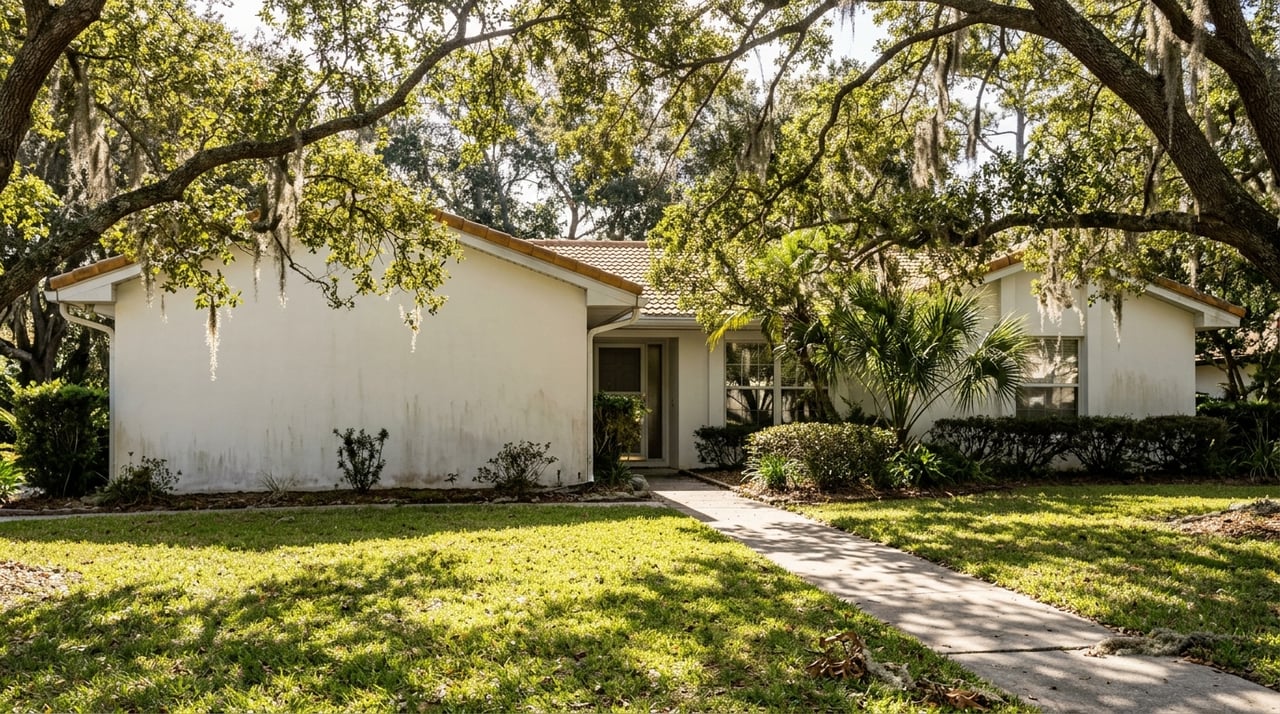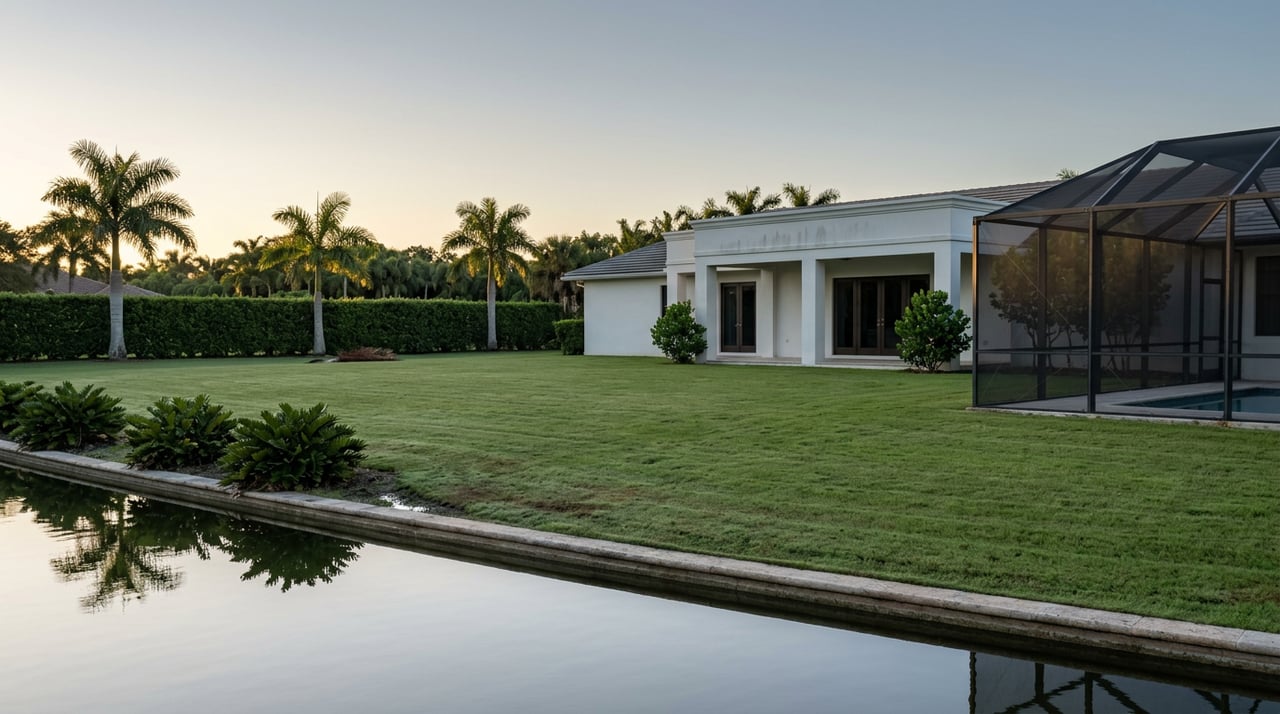
On Wednesday, April 22, blue ribbon in hand, John's Island Property Owners Association President David Fisher stood next to Vero Beach Mayor John Cotugno at one of four heavy valve assemblies buried along the community's irrigation lines. County Commissioner Laura Moss was there. So was Commissioner Joe Earman, three city council members, and staff from the Indian River Land Trust and the St. Johns River Water Management District. The ceremony marked the end of a project most residents never saw being built and the start of something almost nobody outside that crowd fully understood: Johns Island's lawns and two golf courses no longer draw a drop from the aquifer beneath the county.
That sentence sounds like a footnote. It isn't. For most of Johns Island's history, the water keeping those fairways green came from wells tapping the same underground source that supplies drinking water to the island, the mainland, and the rest of Indian River County. The community also supplemented that well water with reuse water piped over from Vero Beach, the kind of treated wastewater most people assume has already been made harmless. It hadn't been. That distinction is the whole story.
The Reuse Water Everyone Assumed Was Already Solved
Ask most residents how Johns Island irrigated its 1,650 acres before this spring and they'd probably say some version of "recycled water, right?" That's technically true and functionally misleading. The reuse water Vero Beach had been sending over an older pipeline was still high in nitrogen. Nitrogen is the exact nutrient that feeds the algae blooms plaguing the Indian River Lagoon, the same waterway that forms one edge of the community. So the system residents assumed was already the environmentally responsible option was, in practice, still contributing to the problem it was supposed to solve.
Fisher put the search for a fix in decade-long terms. The property owners association had been chasing a better irrigation source for almost ten years before Water and Sewer Director Rob Bolton, working through the city's own department, came up with the design that finally worked.
What Actually Happens At That Valve Assembly
The engineering is straightforward once you see the sequence, and it explains why this took until 2026 to pull off.
- A set of newly installed pumps draws water from Vero Beach's main relief canal, located across from Vero Beach Regional Airport. This canal is the same one that empties into the lagoon, carrying nitrogen and phosphorus with it.
- That water is pushed to a repurposed water treatment plant on the north side of Aviation Boulevard, a facility built in the 1950s that the city retired from its main drinking-water system and reassigned to this project.
- The plant purifies the water to irrigation standard.
- A new pipeline carries the purified water under the lagoon itself, connecting the mainland facility to John's Island.
- On the island side, the water empties into holding ponds built to store it before it reaches the sprinklers and golf course irrigation systems.
The volume is specific and worth sitting with: 3 million gallons a day, split between 2.8 million gallons for the property owners association's lawns and common areas and 200,000 gallons for the Club's two golf courses. That's roughly 20 percent of the canal's total flow, pulled out before it ever reaches the lagoon.
Commissioner Moss, who represents most of the barrier island, framed the significance in a single line at the ceremony.
"I would say for me, the single most important thing about this project is that it means the community can stop using drinking water to irrigate lawns and golf courses. It's also important because it can become a template for other communities to do similar projects."
Old System vs. New System
| Old Reuse Water | New Canal-Sourced Water | |
|---|---|---|
| Source | Treated wastewater piped from Vero Beach | Vero's main relief canal, pumped near the airport |
| Treatment | City's older reuse infrastructure | Repurposed 1950s treatment plant, dedicated to this project |
| Nitrogen load | Still high enough to threaten the lagoon | Removed before it reaches the lagoon |
| Draws on the aquifer | Yes, supplemented with well water | No |
| Daily volume to Johns Island | Not separately metered under old system | 3 million gallons, split between the POA and the Club |
The shift isn't cosmetic. It changes what Johns Island is pulling from, and what it's no longer pulling from, every single day.
Three Association Presidents, One Unfinished Job
Bolton first sketched the concept in the summer of 2020, which puts the idea itself at roughly six years old by the time the ribbon was cut. But the search for a solution predates even that. Fisher credited two predecessors by name at the ceremony: Jim Poole, who stood beside him during the ribbon cutting, and Lou Hoynes, who led the association before Poole and was kept away by health issues but was still praised from the podium. Three consecutive JIPOA presidents worked this problem before it got solved, which tells you something about how hard a clean, reliable irrigation source is to engineer for a barrier-island community bounded by ocean on one side and lagoon on the other.
What This Buys The Lagoon, And Who Paid For It
The city's angle on this project is worth understanding too, because it explains why Vero Beach was willing to repurpose a decades-old treatment plant rather than build something new. Bolton said building a stormwater project that removed the same 17,000 pounds of nitrogen per year would have cost the city an estimated $34.2 million. Instead, the city's actual cost came in at about half a million dollars, and the project satisfies Vero Beach's obligations under the state's Indian River Lagoon Basin Management Action Plan through 2035. That's the regulatory framework requiring dozens of Florida cities, counties, and agencies to cut the nitrogen and phosphorus flowing into the lagoon.
The rest of the roughly $13.5 million total came from a mix of sources. The St. Johns River Water Management District and the Florida Department of Environmental Protection contributed more than $5 million because of the project's ecological benefits. The John's Island Property Owners Association covered most of what remained, in exchange for a guaranteed supply of irrigation water that no longer depends on the aquifer or on reuse water that was quietly working against the lagoon it was meant to protect.
That's the trade Johns Island residents made without most of them realizing a trade was happening. Lawns stay green. Golf courses stay playable. And the water table beneath the community, the one shared with every other household on the barrier island and the mainland, gets to recover a little instead of feeding two irrigation systems at once.
If you've spent an early morning on the west course or walked the oak canopy near the North Course during a dry spell, you've seen what steady irrigation on a barrier island actually requires. What changed this spring is where that water comes from and what it's no longer taking from underneath everyone else.
If you're weighing a move to Johns Island, or thinking about what a community's infrastructure decisions say about how it's run, Alexis Miller can walk you through what life here actually looks like day to day, from the club structure to the neighborhoods within the island itself.